The first session
A better response becomes visible.
People see what pressure changes, learn what to do and try the response for themselves.

The flagship programme
For teams that keep losing time to rushed decisions, unclear ownership, weak handovers and repeat work when the pressure rises.
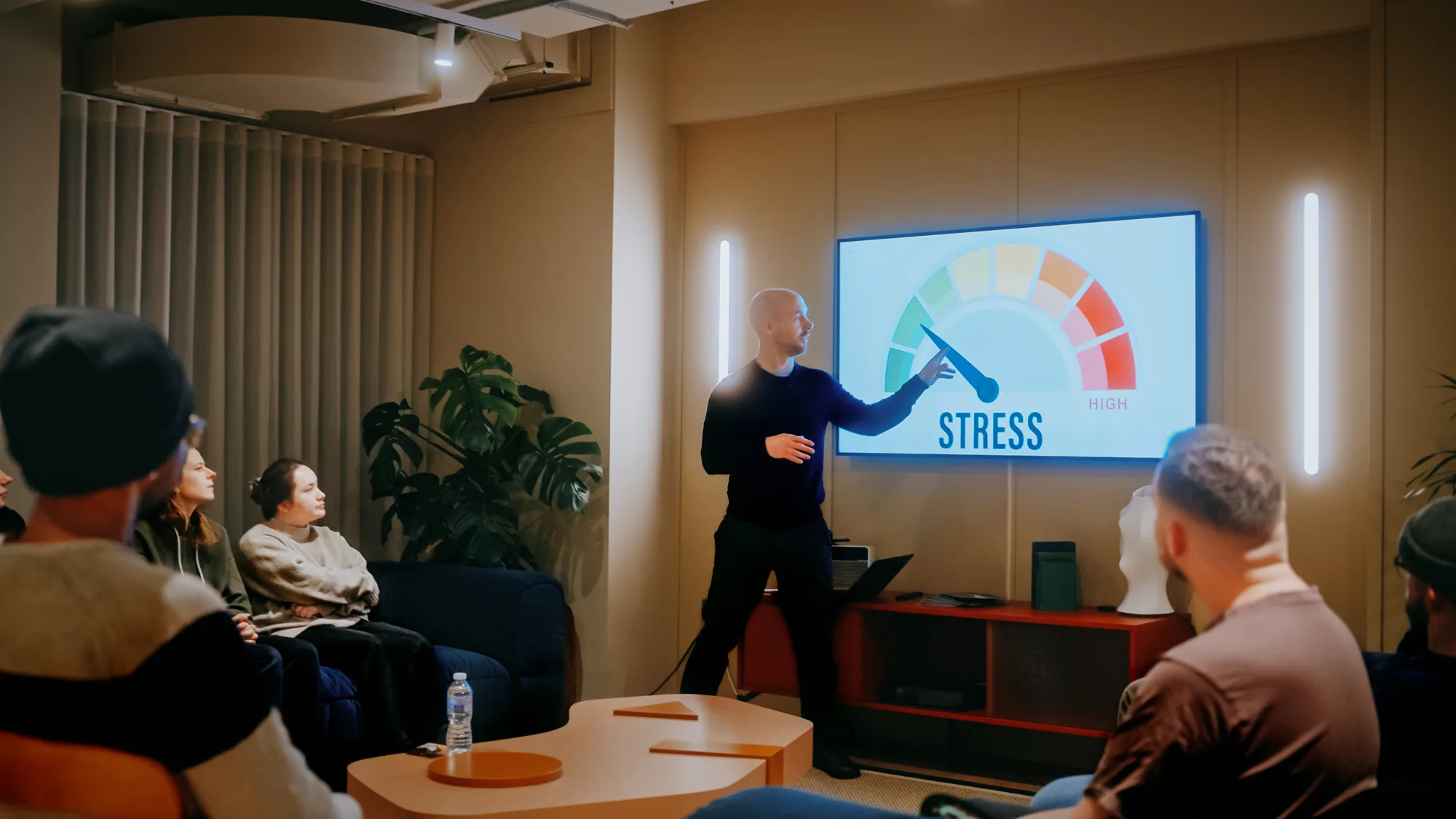
This is for a capable team with a pressure problem that shows up again and again in deadlines, client work, decisions or handovers. One good afternoon will not fix it.
The first session
People see what pressure changes, learn what to do and try the response for themselves.
Across eight weeks
Managers learn what to watch and how to keep decisions, ownership and handovers clear after Paul leaves.
Paul and the decision-maker choose the repeating pressure problem and one business measure the company already follows.
The team sees what pressure changes and learns how to stay clear, communicate properly and keep ownership visible.
Each session uses the deadlines, decisions and difficult moments the team is facing now, so the learning is immediately useful.
Managers use one agreed response in real work and send Paul a short note on what happened.
The final session compares the team with where it started and gives managers the simple tools they need to keep the improvement going.
Paul checks whether the team is still using the response and where anything needs tightening.
The handover principle
Paul’s last job is making himself unnecessary.
Paul looks at what changed in the room, what the team used in real work and whether one existing business measure moved in the right direction.
Breathing, focus and communication stay more controlled when the pressure rises.
Decisions are clearer, ownership is named and handovers create less repeat work.
Managers record when the response was used in a real pressure moment and what happened next.
The client chooses a measure it already trusts, such as rework, turnaround time or a productivity target.

Pressure still present. Response changed.
It is not about removing pressure; it is about creating enough calm and clarity to respond well when it matters.
Rushed through, or stalled until the most senior person is free.
Made in the room, with a named owner.
Ownership blurs at the handover and finished work comes back around.
Hold first time, so the work moves on without rework.
Managers become the rescue point and everything queues behind them.
The team runs its trained response and keeps delivering.
Paul will recommend the programme only when the problem keeps returning, matters to the business and needs more than one session to change. Otherwise, he will recommend a smaller starting point.
Start with the Pressure ResetTell Paul what keeps going wrong, how often it happens and what it is doing to the work. He will tell you which route fits.
Discuss the programmeMost teams start with a Pressure Reset and carry the momentum of a visible result into the programme. When the priority is already obvious, Paul may recommend going straight to the eight weeks.
Each session ends with one response to use in real work over the next fortnight. The manager sends Paul a short note on what happened.
No. Paul looks at what the team does together, what changes in the work and one business measure the company already follows. Employee sleep and wearable data are not part of the team programme.
Managers take ownership. Ongoing support is only recommended when the work is changing, new people are joining or the team faces another important pressure period. Paul’s last job is making himself unnecessary.
Show Paul what happens and what it costs. He will tell you whether the full programme fits.
Book 15 minutes